
Great White Shark Tooth 2.02 Megalodon Teeth Era Fossil unrestored Neogene





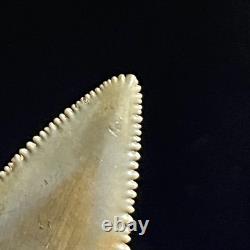


This tooth is 5-3 mya from the Yorktown Formation. Negatives: The lingual face of the root has minor damage.
Positives: The serrations are sharp and complete. The tooth also has some of the fossil formation sedimented to it. More commonly known as the. Is an iconic and apex predator of the ocean.
These magnificent creatures are easily recognized by their torpedo-shaped bodies, grey or dark blue/brown backs, and striking white undersides, a camouflage technique known as countershading. Their most distinguishing feature is their mouth, armed with rows of large, triangular, serrated teeth perfectly designed for cutting flesh. As the largest predatory fish on Earth, adults typically measure between 15 and 20 feet in length and can weigh anywhere from 1,500 to 4,000 pounds, with some individuals growing even larger. Great whites are remarkably long-lived, with lifespans estimated to exceed 70 years. They inhabit temperate and subtropical coastal surface waters across all major oceans, though juveniles often remain in shallower, warmer near-shore nursery areas. Their diet shifts as they mature; younger sharks feed on fish and rays, while adults primarily prey on marine mammals like seals, sea lions, and dolphins, often employing powerful ambush tactics. Unlike most cold-blooded sharks, great whites are. Allowing them to maintain warmer body temperatures in cooler waters, which enhances their hunting prowess. They also possess an acute sense of smell and highly sensitive electroreceptors to detect prey.While generally solitary, they can gather at abundant food sources and display complex social behaviors. Despite their fearsome reputation, attacks on humans are rare and often investigative rather than predatory.